
Industrial Inspection
Reliable Industrial Inspections for Safety and Compliance
Our expert team delivers precise inspection services to ensure your industrial assets operate safely and efficiently. From API inspections to advanced NDT, we help you maintain standards and prevent risks.
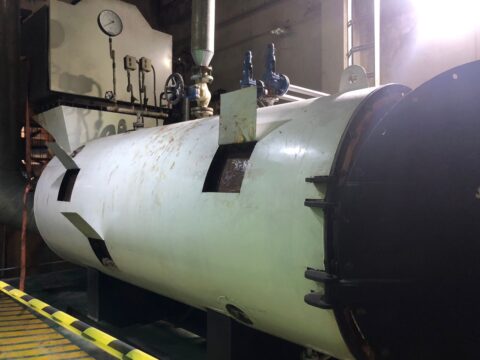
API Inspection Services
Our team performs API Inspection Services in accordance with American Petroleum Institute (API) standards. We assess the condition and integrity of critical industrial assets to ensure full compliance.
API inspection scope includes:
- Pressure Vessels (API 510)
- Piping Systems (API 570)
- Risk Based Inspection (RBI) (API 580)
- Above Ground Storage Tanks (API 653)
- Refractory Personnel Inspection (API 936)
These inspections help identify degradation mechanisms, assess remaining life, and ensure compliance with applicable codes and operational requirements.
Advanced Non-Destructive Testing (Advanced NDT)
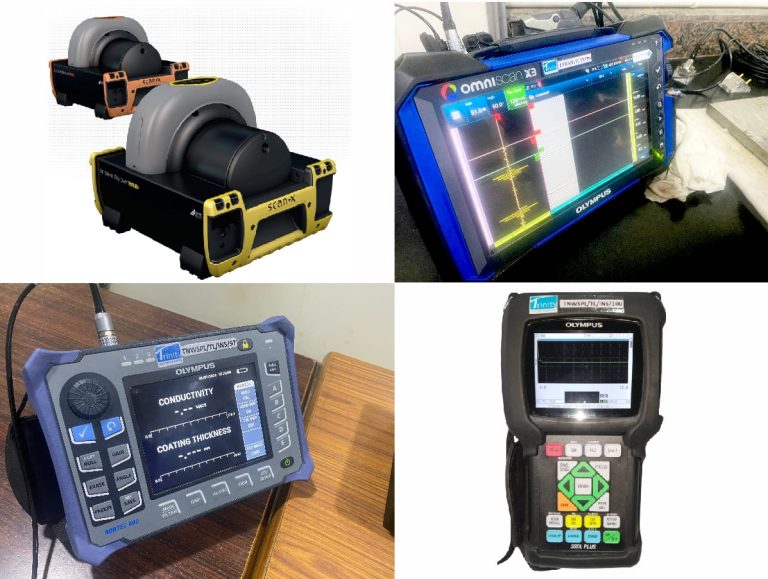
HBI offers Advanced Non-Destructive Testing (NDT) to detect material anomalies with high accuracy. Our technicians use these techniques to identify defects without damaging the asset. Moreover, these services provide precise sizing for complex inspections.
Advanced NDT services include:
- Phased Array Ultrasonic Testing (PAUT)
- Time-of-Flight Diffraction (TOFD)
- Eddy Current Testing (ECT)
- Acoustic Emission Testing (AET)
- Digital Radiography (DR)
Advanced NDT techniques are used for complex inspections where enhanced defect detection and precise sizing are required.
Conventional Non-Destructive Testing (Conventional NDT)
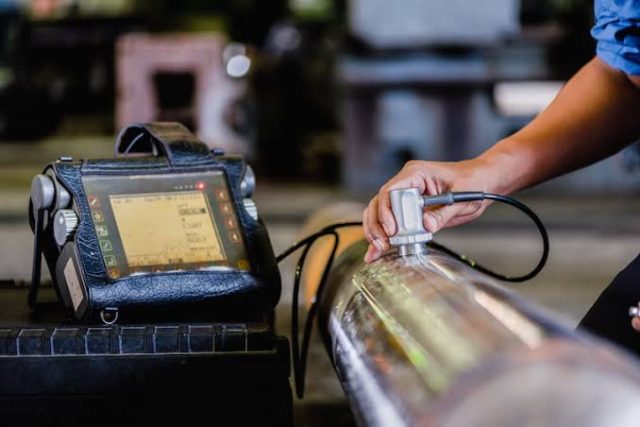
Our Conventional NDT Services provide reliable methods for detecting surface and internal defects. We support routine maintenance programs through Ultrasonic and Radiographic testing. Therefore, we ensure your welded joints and materials remain safe for operation.
Conventional NDT services include:
- Ultrasonic Testing (UT)
- Magnetic Particle Testing (MPT)
- Liquid Penetrant Testing (LPT)
- Radiographic Testing (RT)
- Visual Inspection (VI)
- Hardness Testing
- Holiday Testing (Brush & Ring methods)
These methods are widely used for fabrication inspection, in-service inspection, and maintenance programs.